Why Japan, and why now
Two things changed the sums. The EU-Japan Economic Partnership Agreement, in force since 1 February 2019, phased out the EU’s 10% duty on Japanese-built cars, so with the origin claimed properly a car from Japan can clear customs at 0% (check the rate for your car’s tariff code on TARIC, and see the Commission’s EPA page). A used car from Great Britain still pays 10%. And Japanese cars arrive with low mileage and a full inspection history, because the shaken system makes an old car expensive to keep in Japan. The price is patience: three to four months from bid to Irish plates, and paying for a car you have never sat in.
Here is the whole route, in order, with the real numbers.
The nine steps, auction to plates
Pick the car and check the tax first
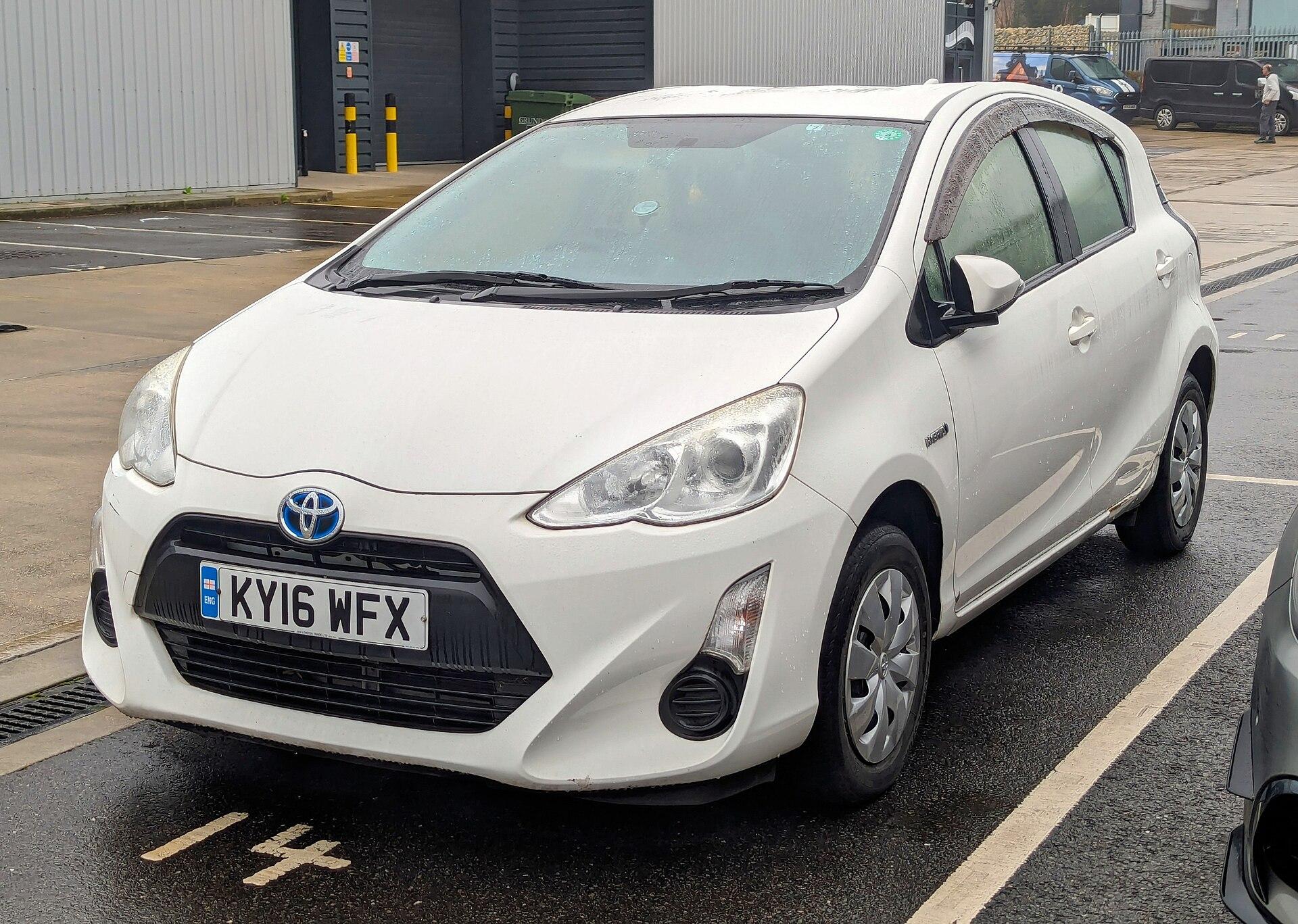
Aqua, Prius, Fit, Note e-Power, Alphard, Hiace, the kei cars (N-Box, Sakura). Before you fall for one, put the model code or a chassis number into the calculator above: the VRT is the one cost you cannot negotiate, and it differs a lot between versions of the same car.
Choose an exporter or agent
You bid at the Japanese auctions (USS, TAA, JU and others) through a licensed exporter. Fees run ¥40k-100k per car plus a percentage at some firms. Ask up front whether they will put a statement on origin on the invoice: it is the simplest way to claim the 0% EU-Japan rate. The other route is importer's knowledge, which needs supporting documents from the exporter or manufacturer, so ask what papers they can give you. With neither you pay 10% duty.
Read the auction sheet before you bid
Every auction car has an inspector's sheet: grade, odometer, repair history, the handwritten condition map. Grade 4 or better with an R (repaired) flag absent is the usual target. Check the chassis number's auction history yourself rather than trusting a screenshot.
Win, pay, and get the paperwork moving
You pay the exporter the hammer price, fees and freight in yen or dollars. The car is deregistered (the export certificate is your proof of ownership and of the model code), trucked to the port and booked on a ship. Two to three weeks.
Ship it: direct to Cork or via Zeebrugge
Grimaldi runs a direct RoRo service Yokohama/Toyohashi to Cork roughly once a month, about 9 weeks at sea. The alternative is Japan to Zeebrugge (25-35 days) and a CLdN ferry to Dublin or Cork (2 days), faster and more frequent but it needs a forwarder for the transhipment. Freight is charged by volume: a kei car is about 9 m³, a Serena-size MPV about 15 m³.
Clear customs on arrival
A customs declaration is filed in Revenue's AIS system (an EORI number is needed, so most people use a customs agent, typically €150-300). Duty is 0% with the origin claim (statement on origin or importer's knowledge) or 10% without; VAT is 23% on price plus shipping plus any duty. Keep the declaration's MRN, the NCTS asks for it.
Within 7 days: book the VRT inspection
Book at ncts.ie or on 01-4135975 within 7 days of the car landing, and complete registration within 30 days. Miss that and Revenue adds 0.1% of the VRT for every day the car is not registered, counted from the date it first entered the State. Slots in Dublin and Cork can be two to three weeks out, so book the moment you have an arrival date.
At the NCTS: documents, VRT, plates
Export certificate with certified translation, CO2 and NOx confirmation from the Japanese ministry site, customs MRN, invoice, ID, PPS number, proof of address, form VRTVPD2, evidence of arrival date. Pay the VRT, get the registration number, fit plates within 3 days.
Motor tax, insurance, NCT
Tax the car at motortax.ie with the RF100 form. Move the insurance to the Irish registration (a few insurers decline JDM models, so get a quote before you bid). Cars 4 years and older then need an NCT.
Costs on the Japan route
| Item | Typical amount |
|---|---|
| Auction price + agent fee | hammer price + ¥40k-100k |
| Japan-side: inland transport, deregistration, export declaration, marine insurance | ¥70k-160k (€400-950) |
| Sea freight (RoRo, by volume) | €800-2,000: kei car at the bottom, MPV at the top |
| Customs agent in Ireland | €150-300 |
| Customs duty | 0% for a Japanese-built car with the origin claim (statement on origin or importer's knowledge); otherwise 10% of price + shipping |
| VAT | 23% of price + shipping + any duty |
| VRT | CO2 % of Irish OMSP + NOx levy; check above |
| Plates | €20-30 |
| NCT (cars 4+ years) | €55 |
Worked example: a 2019 Toyota Aqua at ¥900,000 (about €5,500) lands at roughly €10,000-11,500 on Irish plates once freight, VAT and VRT are in. Put your own numbers into the total import cost calculator.
The model code is everything
Revenue’s valuation system stores Japanese cars under their official model code, the string like DAA-NHP10 printed on the export certificate. The same code sits in the chassis number before the dash: NHP10-2345678. The calculator above reads either form, finds the officially valued versions for that code and takes the year and mileage into account. If a car is not on Revenue’s list, the OMSP page explains how the valuation is set and appealed.
The tax is one thing, the car’s past is another
Most cars exported from Japan passed through the auction houses, and those records hold what matters: the odometer reading on auction day, the inspector’s grade and the handwritten condition sheet. That is where an accident repair or a wound-back odometer shows up, and it is worth checking before you bid, not after the car is on a ship. How the auction houses and exporters work is in the Japanese car auction guide, and every code on the sheet is decoded in how to read an auction sheet.
You can check the auction history by chassis number here: appearances and grades are free, the full sheet is €9.99. Then demand three things from your agent: that sheet, the export (deregistration) certificate and, if offered, the JEVIC odometer certificate. If the sheet mileage and the export certificate disagree, walk away.
Five mistakes that cost real money
- No CO2 and NOx evidence at the NCTS. Revenue then charges the top CO2 rate and the flat NOx maximum: €600 for a hybrid, €4,850 for a diesel. Print the ministry confirmation, with the description and weight matching the export certificate. What the levy should be is on the NOx charge calculator.
- No origin claim. Revenue gives the 0% rate on a statement on origin from the Japanese exporter, or on importer’s knowledge backed by documents from the exporter or manufacturer. With neither it is 10% duty on price plus shipping, and 23% VAT on the duty as well. On a €6,000 car with €1,500 freight that is about €920 thrown away.
- Missing the 30 days. Revenue counts the late charge from the date the car first entered the State, not from when you collect it at the port. Book the NCTS the day you have an ETA; the VRT booking guide has the checklist.
- Trusting a screenshot of the auction sheet. Sheets get cropped and grades get edited. Look the chassis number up yourself, and read the guide to clocking and fake sheets.
- Insurance after the fact. Some Irish insurers will not quote on JDM-only models or on cars with no Irish history yet. Get a quote on the exact model code before you bid.
Start with the number that decides everything: check the VRT by chassis number or model code, free, on Revenue’s live valuation.
Sources
- Revenue: EU-Japan preferential origin (published 17 October 2025)
- European Commission, Access2Markets: EU-Japan Economic Partnership Agreement (in force since 1 February 2019)
- European Commission: TARIC (look up heading 8703 with origin JP)
- Revenue: Additional VRT (published 9 July 2026)
- NCTS: VRT frequently asked questions (documents for a used car from Japan)
Checked 24 September 2026.